
 Send Inquiry

 Send Inquiry
Why UV Lasers Stand Out
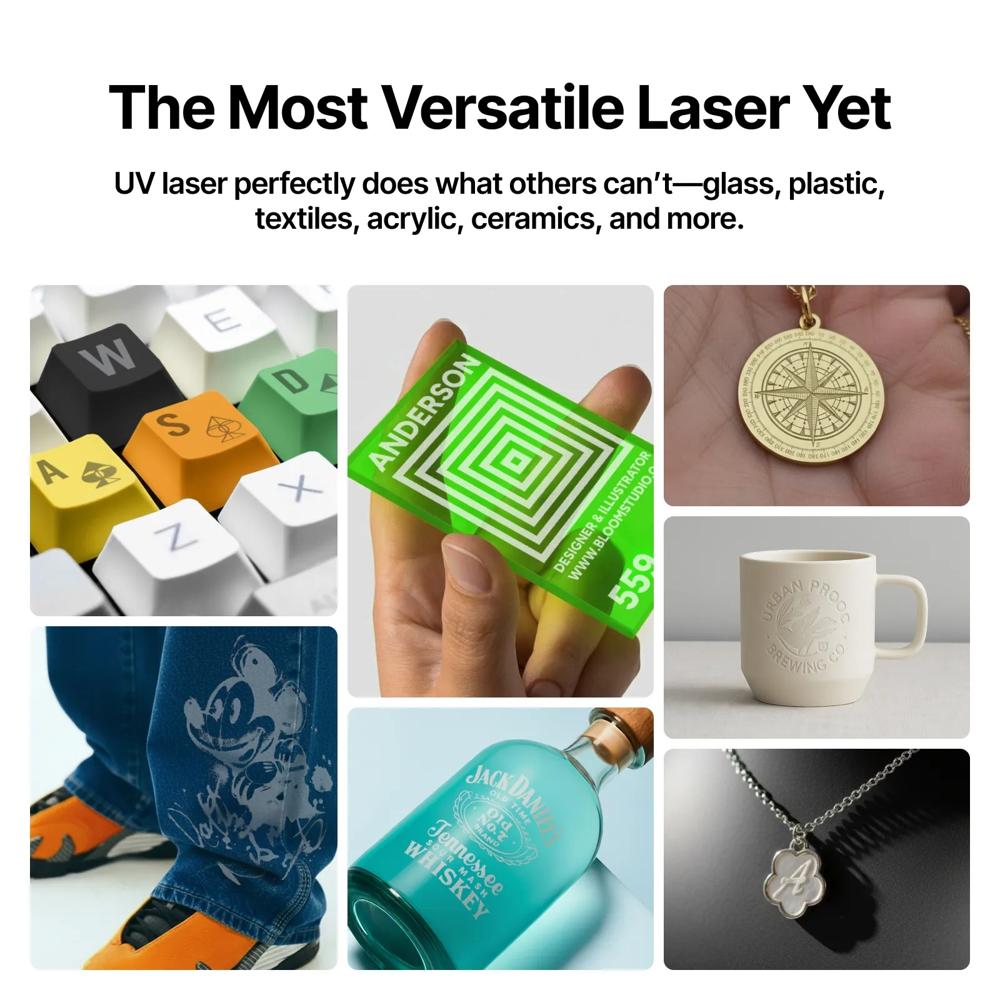
For years, UV technology has been a cornerstone of fields like medicine and electronics, where precision is paramount. With an ultra-short 355 nm wavelength, the UV laser achieves micron-level detail and flawless finishes without scorching. Excelling where others fall short, it works effortlessly on glass, plastic, textiles, acrylic, and more.
Mastering Glass, Inside and Out
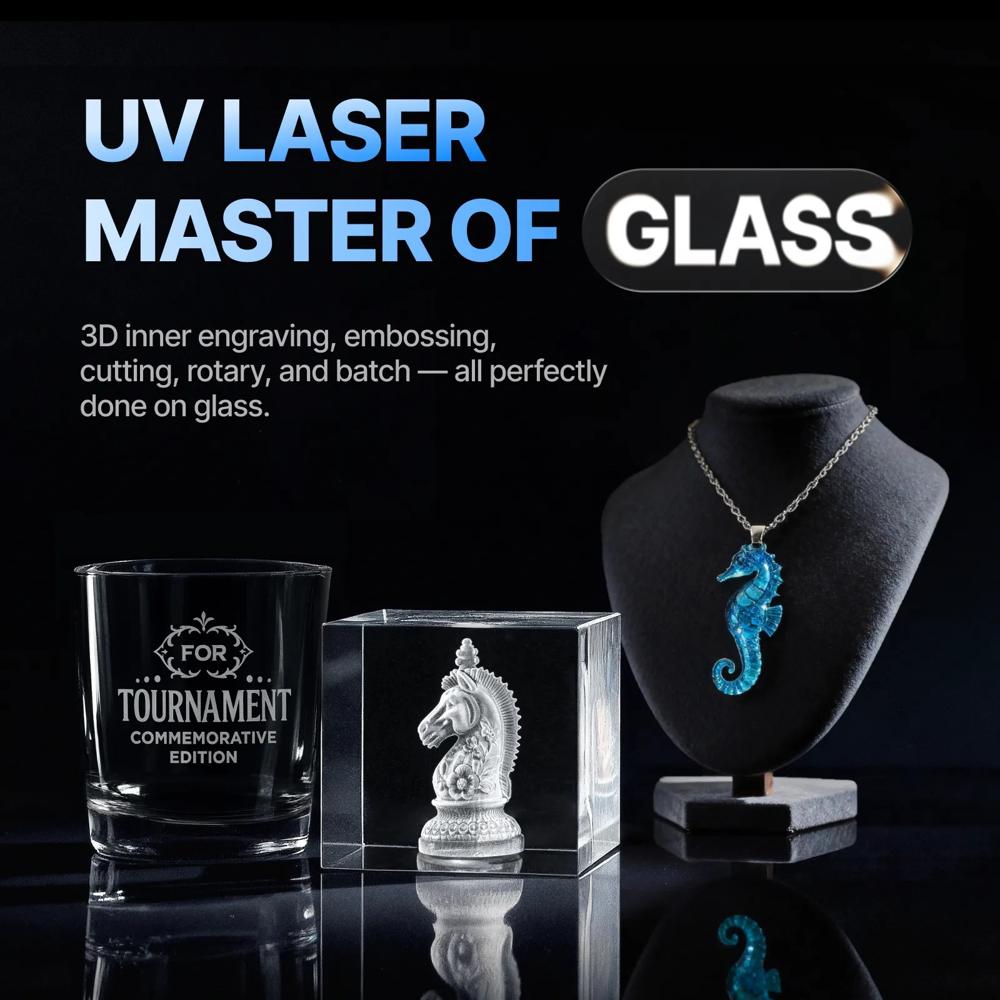
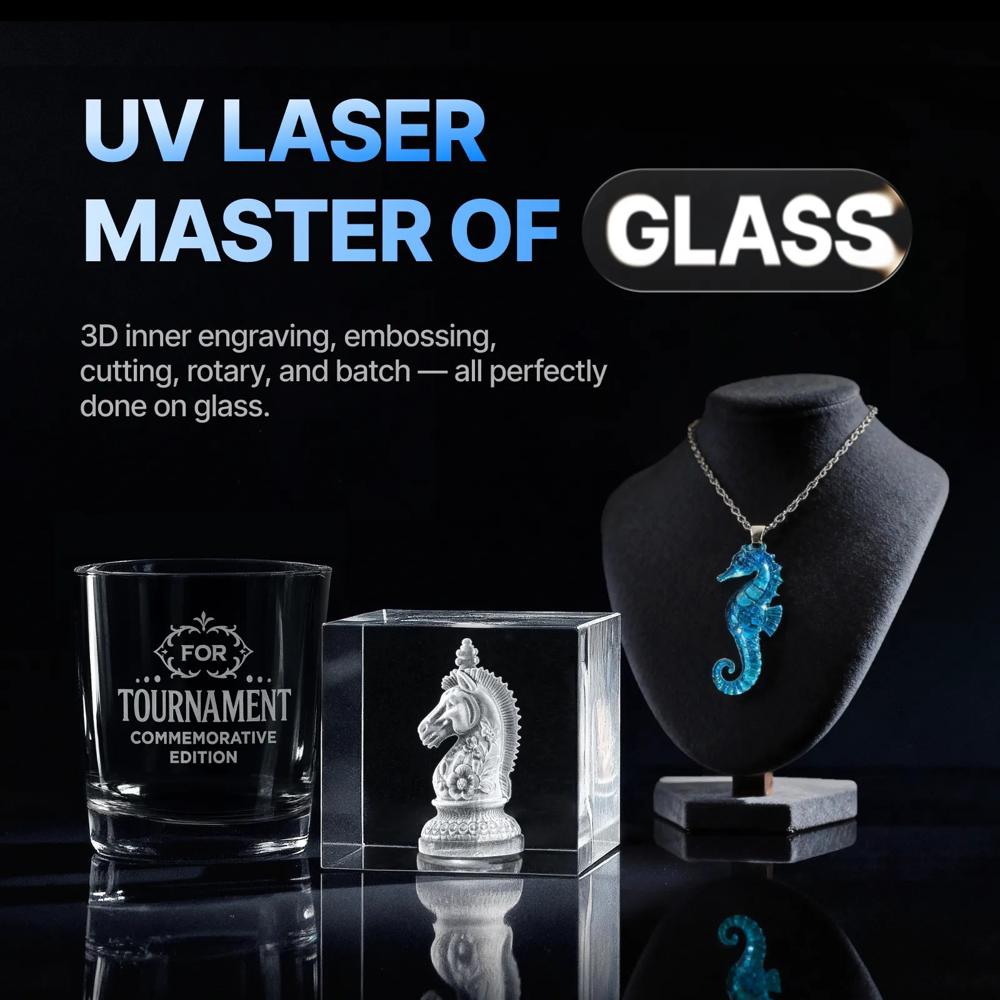
UV laser is a leading technology for precise glass processing. From 3D inner engraving to embossing, cutting, rotary engraving, and batch processingeach technique flawlessly transforms glass into high-quality, long-lasting masterpieces.
UV Power, Unmatched Performance
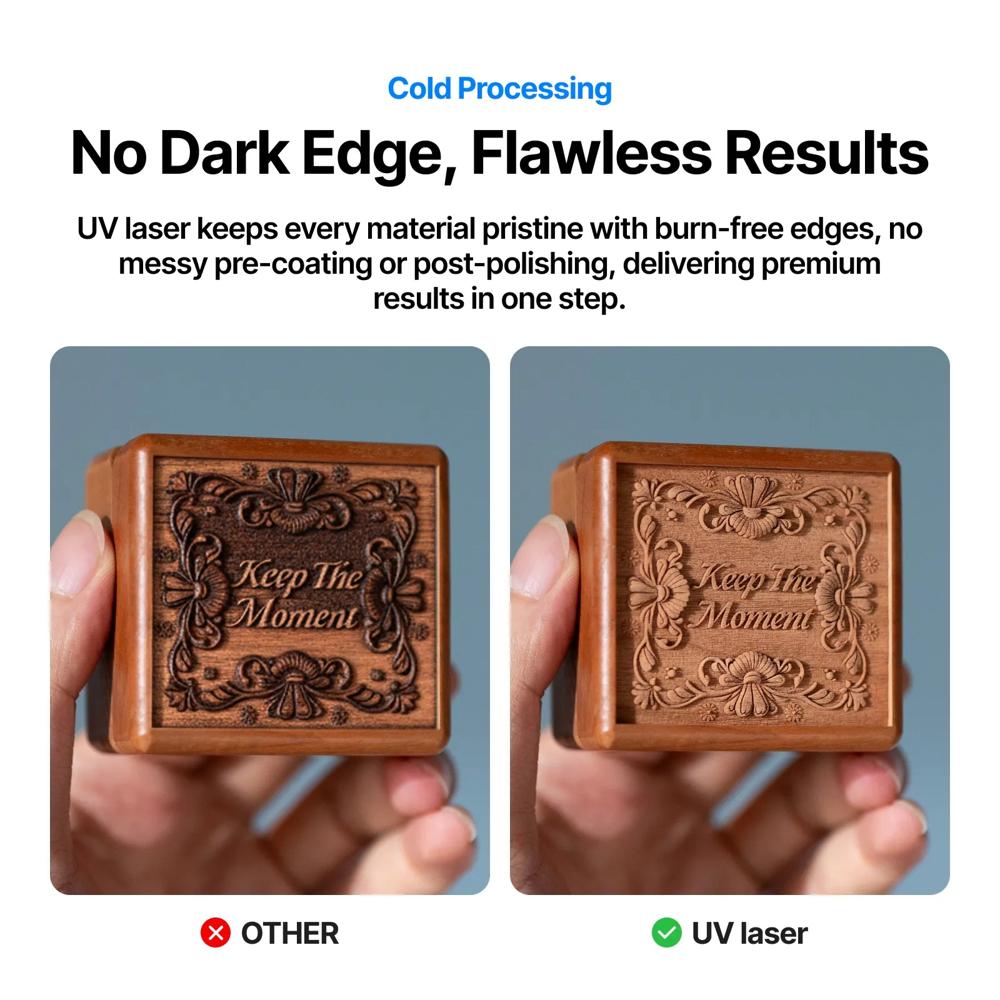
No Dark Edge, One Step to Perfection
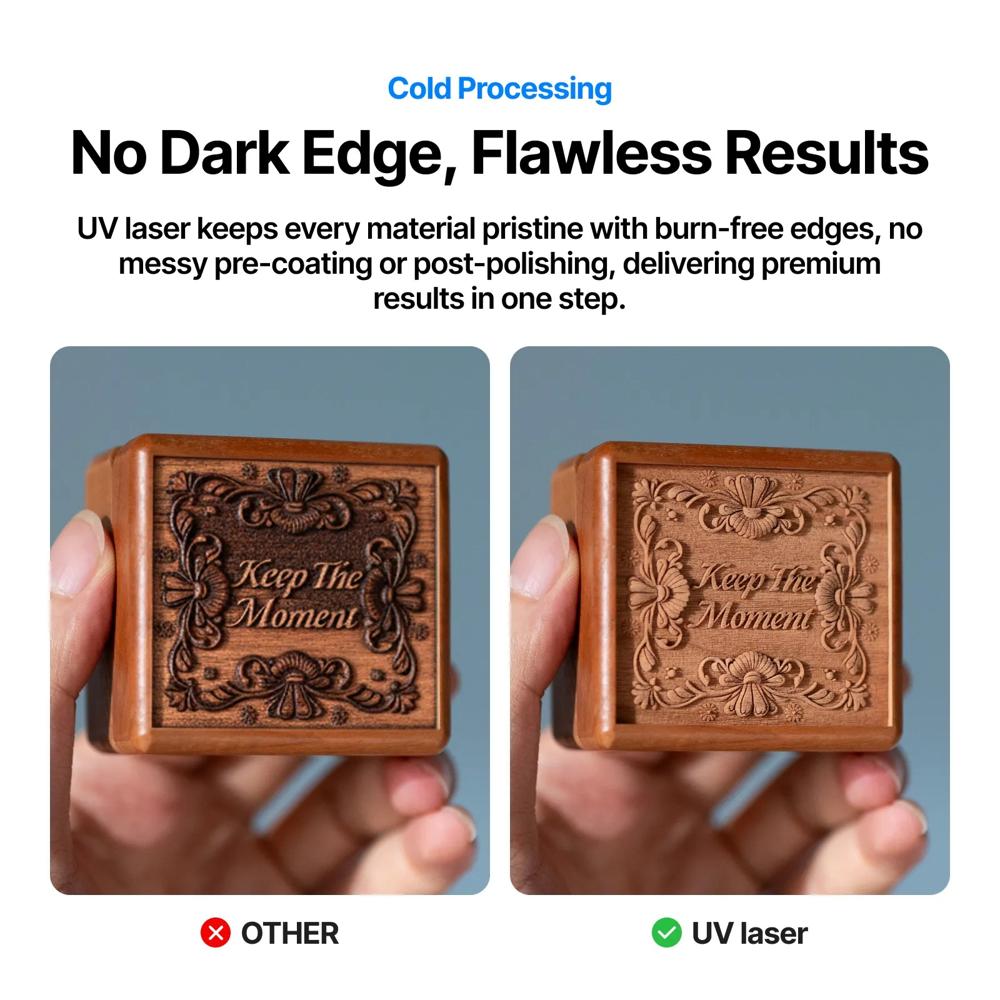
The UV laser uses high photon energy to break molecular bonds directly with a minimal heat zoneno burn marks, no charringpreserving your materials integrity. No messy pre-coating or post-polishing, only clean, precise, premium results. Thats the magic of cold processing.
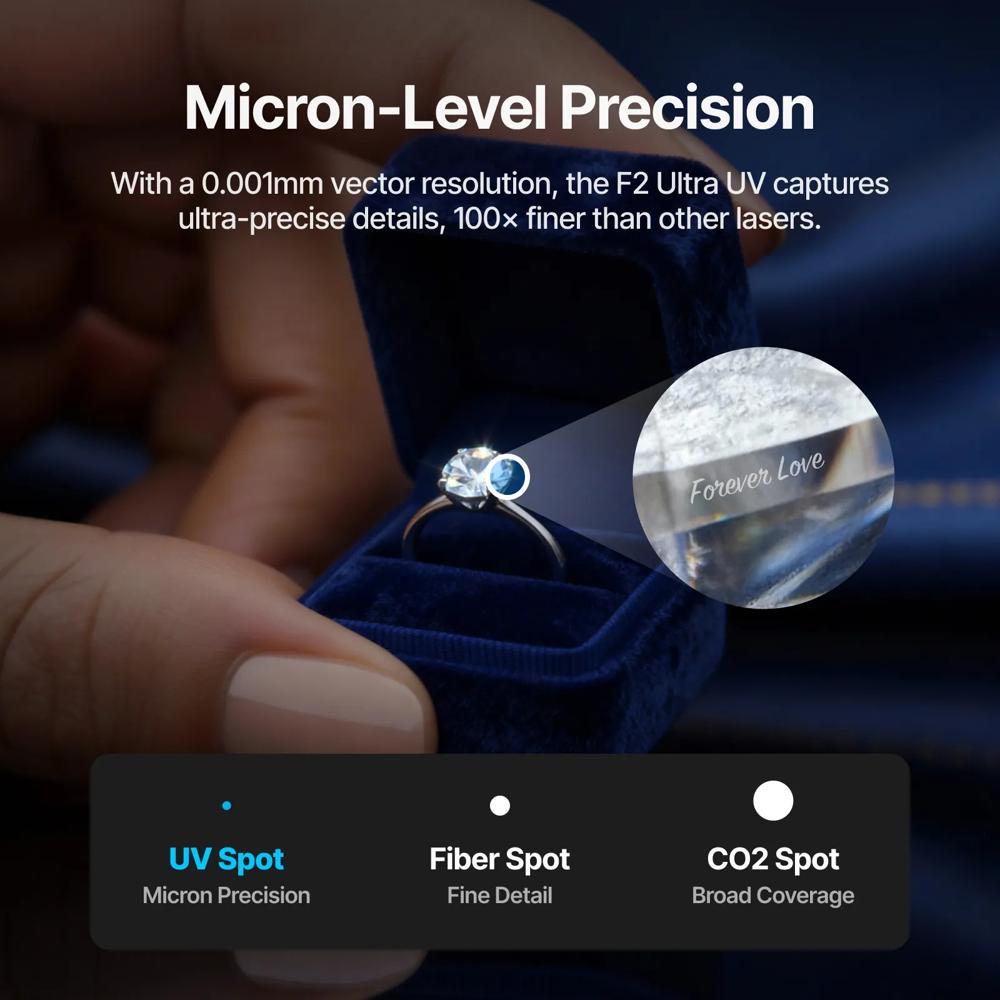
Micron Precision, Museum-Grade Detail
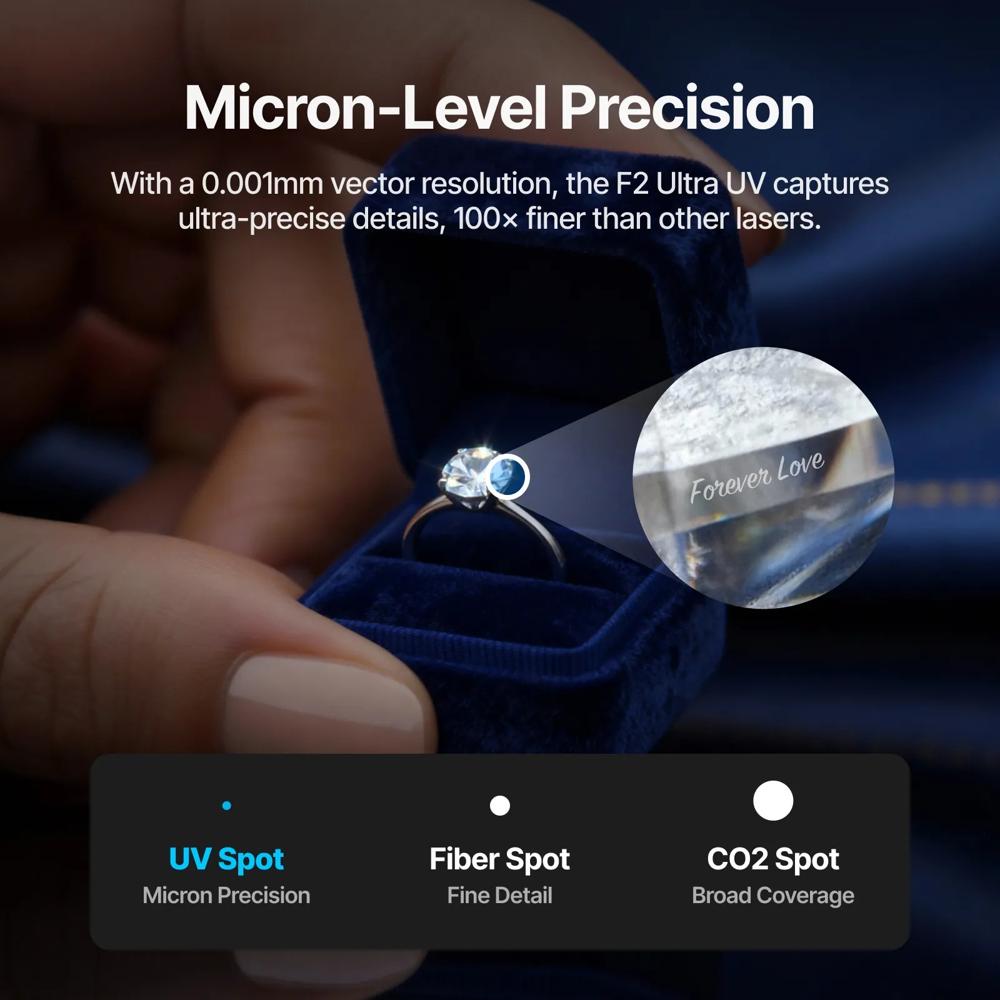
The shorter the wavelength, the smaller the laser spotUV lasers set a new standard for micron-level detail. With a spot size of less than 10 m, UV laser engraving is over 100 smaller than CO2 lasers, ensuring every line is sharp, flawless, and precise down to the finest detail.
The Smartest Experience Ever Built
2D to 3D to Masterpieces, Incredibly Easy
Think 3D inner engraving is complex? Think again. Powered by xTools professional AI agent, we offer the simplest all-in-one solutionturn text or 2D into 3D with one click and enjoy stunning results in minutes.
Dual 48MP Cameras. See It. Get It.
The industrys first dual-camera UV laser system. Two cameras handle automatic positioning and focusing, achieving 0.2 mm accuracy60% more precise than single-camera systems. Every process is consistently effortless, and every detail is exactly as you imagined.
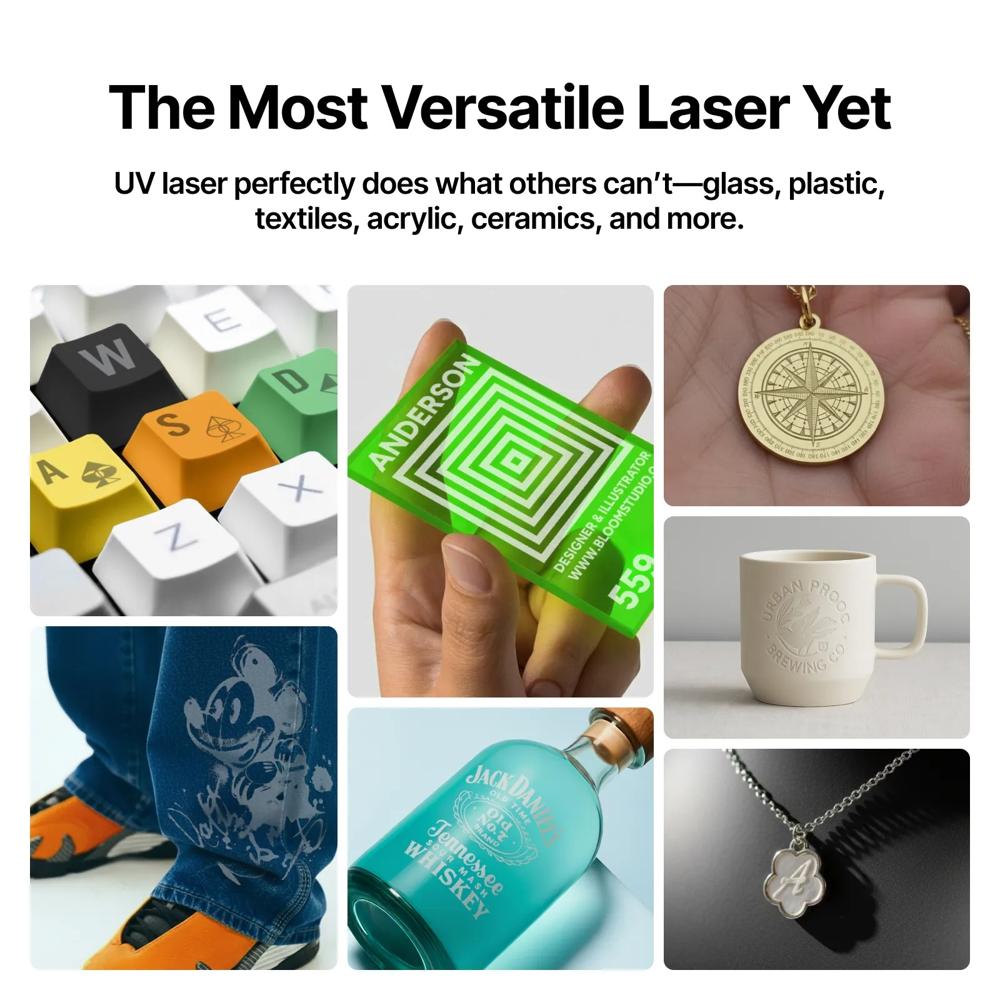
Unlock More Materials. Go Beyond Limits.
As the ultimate laser for almost all materials, UV laser does what others cant capturing fine detail even on crystal, ceramic, acrylic, agate, and more, offering the widest material compatibility ever. With UV lasers, the only limit is imagination.
How Does UV Laser Work
The UV laser uses photochemical ablation, often called cold marking. The short, high-energy UV photons carry enough energy to directly break the molecular bonds on the materials surface without generating significant heat. UV laser is an ideal option for delicate materials that cant be exposed to the immense heat produced by IR or blue lasers.
CO2 and fiber lasers rely on heat. They hit the material, cause rapid temperature rise (melting or vaporization), and the resulting mark is a product of this thermal effect (e.g., charring wood, oxidizing metal, melting plastic). This creates a Heat-Affected Zone (HAZ), leading to micro-cracks in glass or warping in sensitive plastics.
UV Laser vs. Traditional Laser
There are three fundamental aspects of laser engraving to consider when evaluating the differences between traditional and UV laser tools: Material compatibility, mechanism, and wavelength.
As mentioned above, UV laser marking is a cold process, which is the key difference. Engraving involves ablation, the wearing away of surface spots, which traditional laser tools accomplish through hot marking. With UV laser tools, the ablation process is photochemical. When comparing the wavelength, fiber and CO2 lasers feature long emissions up to 10,600 nanometers (nm). UV lasers emit wavelengths around 355 nm. Whereas fiber lasers are used to mark metal and hard acrylics, UV lasers can mark with high resolution on ceramics, film, glass, and a wider range of heat-sensitive materials.
The UV Laser Superpower
Accessibility and versatility are the main benefits of UV laser engraving. The cold process features zero heat damage; it eliminates the risks of melting, cracking, or material distortion. You can use UV laser tools for ultra-fine precision engraving, like on micro-electronic components. You also get a higher versatility of high-contrast permanent marking on many materials.
FAQ
Why only 5W? Is it enough?
5W is the optimal balance for desktop size, cost, and high-precision engraving.
UV lasers have a short wavelength and high-energy photons, which directly break molecular bonds with very little heat. This cold processing delivers much higher energy density and precision than traditional heat-based lasers.
Thats why 5W is considered the golden power level for desktop UV systems. Even for demanding tasks like 3D engraving inside glass, the F2 Ultra UV typically uses only around 60% of its powerleaving plenty of performance headroom.
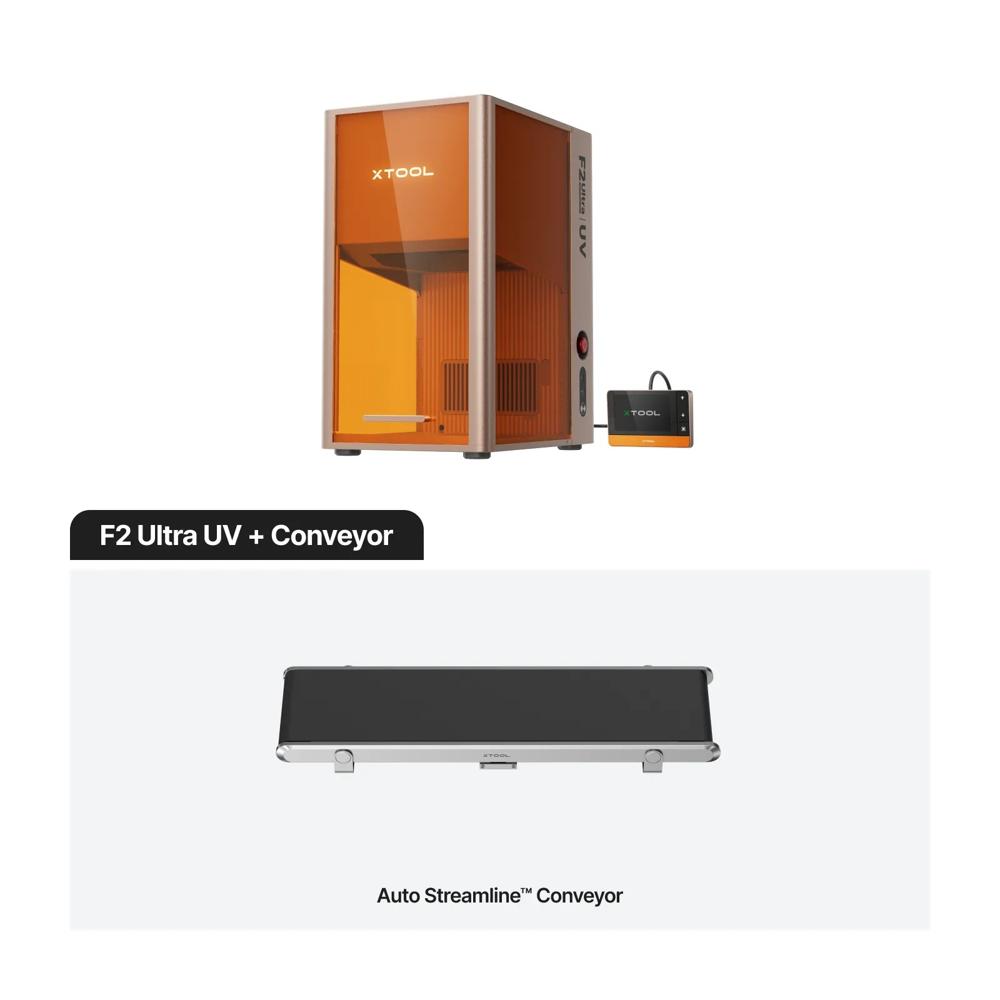
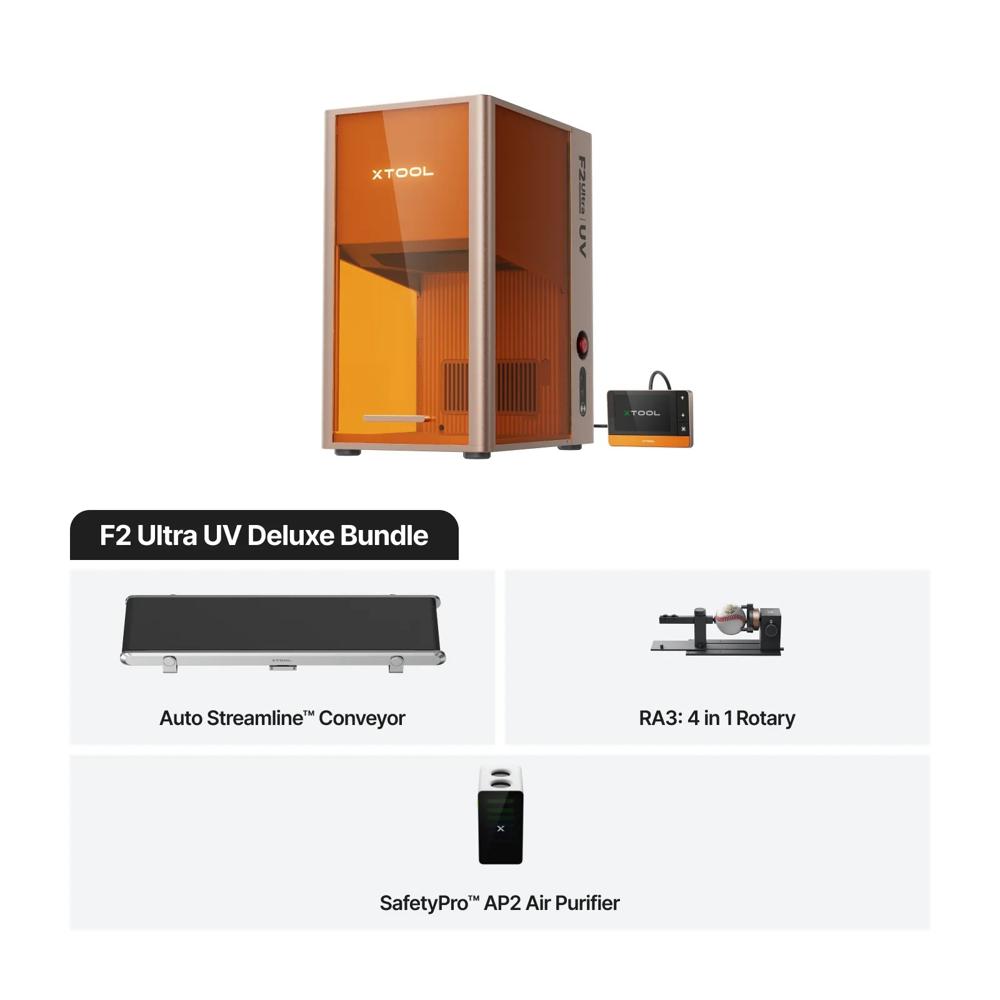
Automation: Auto Streamline Conveyor, Pedal/Button Switch
Safety & Purification: Fire Safety Set, Safetypro AP2 Purifier, Safetypro IF2 Inline Fan.
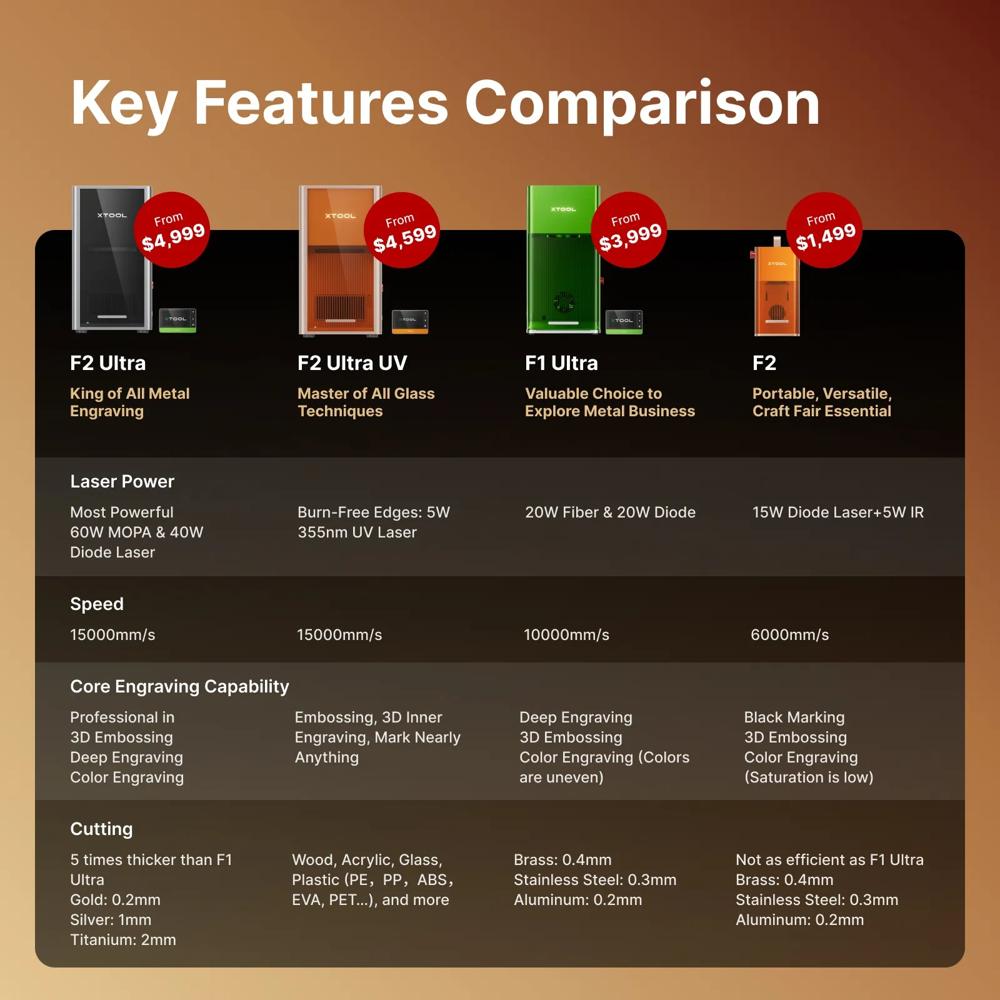
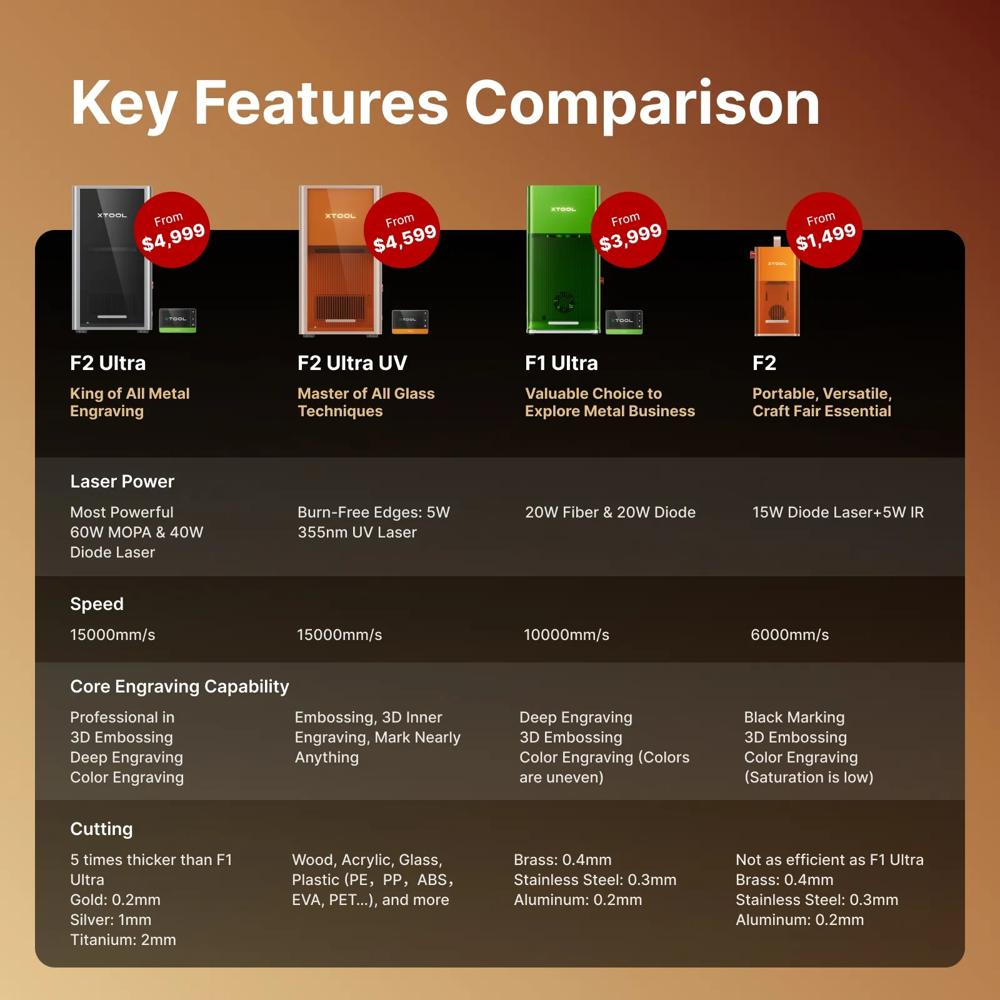
Can F2 Ultra UV and F2 Ultra swap field lenses?
Absolutely not. Please note that F2 Ultra UV and F2 Ultra are not the same machine. They use different light sources and different interfaces, so their field lenses are not interchangeable.
The key difference: They are two machines with completely different engines. They share the F2 Ultra flagship series nameindicating they are both high-end galvanometer systemsbut they are designed for entirely different materials and applications.
| Specifications | |
| Processing Capacity | |
| Laser Type | 5W 355 nm UV Laser |
| Processing Mode | Laser Engraving
Laser Cutting |
| Supported Materials | Laser Engravable: Glass, Crystal, Acrylic, Wood, Metal, Leather, Plastic, Rubber, Silicone, Ceramic and more
Laser Cuttable: Paper, Wood, Plastic, Glass, Fabric, Leather and more |
| Working Area | 7.9 7.9 Surface Engraving (200 mm 200 mm)
2.8 2.8 Inner Engraving (70 mm 70 mm) 7.9 19.7 with conveyor (200 mm 500 mm) |
| Max. Working Speed | 590.55 ips (15,000 mm/s) |
| Max. Laser Cutting Capacity (Basswood) | 0.59 (15 mm) in Multiple Passes |
| Max. Laser Cutting Capacity (Acrylic) | 0.47 (12 mm) in Multiple Passes |
| Max. Processing Height | 5.9 (150 mm) |
| Max. Rotary Engraving Diameter | 5.9 (150 mm) |
| Smart Software | |
| Supported Software | xTool Studio |
| Operating System | Windows/macOS |
| Connection Method | USB/Wi-Fi/IP |
| Supported Files | 2D: SVG, DXF, JPG, JPEG, GIF, PNG, BMP, SVG, DXF, and WEBP
3D: STL, OBJ, AMF, 3MF, GLB, PLY |
| AImake Compatibility | Yes |
| Easy Operation | |
| Pre-assembled | Yes |
| Built-in Camera | 48 MP Dual Cameras |
| Positioning Method | Camera Positioning |
| Focus Mode | Autofocus |
| Ranging System | LiDAR Ranging System |
| Preview Method | Smart Camera Preview
High-speed Light Live Preview |
| Accuracy & Precision | |
| Laser Spot Size | 0.01*0.01 mm |
| Positioning Accuracy | 0.0079 (0.2 mm), Camera |
| Ranging Accuracy | 0.0079 (0.2 mm), Camera |
| Image Resolution | 48MP |
| Motion Resolution | 0.00005 (0.00133 mm) (Inner Engraving) |
| Vector Fitting Resolution | 0.00004 (0.001 mm) |
| General | |
| Safety Certification | Class 4 Laser Safety |
| Machine Dimensions | 11.6 x 16.9 x 20.5 (294 mm x 429 mm x 520 mm) |
| Machine Weight | 49.6 lb (22.5kg) |
| Max. Machine Input Power | 348W |
| Power Adapter Input Voltage | 100 V 240 V, AC 50/60 Hz |
| Storage Temperature | -10 60 C |
| Operating Temperature | 10 30 C |
| Storage Humidity | 10 60% Rh |



 Send Inquiry
